When we look at today’s education system, one question strongly comes to mind — is the true purpose of education slowly getting lost? Has education become limited to scoring maximum marks, securing ranks, and showcasing success? This is a serious concern that every parent, teacher, and member of society needs to reflect upon.
Earlier, education was considered a process of gaining knowledge, values, critical thinking, and personality development. Students were encouraged to ask questions, explore new ideas, develop confidence in their opinions, and build the ability to face life’s challenges. The true purpose of education was to shape responsible and capable individuals. However, today, in many places, the entire focus of education has shifted toward “marks.” Instead of measuring intelligence, creativity, and understanding, students are often judged only by their report cards.
The situation has changed so much that even second or third-grade students confidently say, “Only the ten questions given by the teacher will come in the exam.” If children at such a young age are developing the mindset that memorizing a few selected questions is enough to pass examinations, then somewhere the current education system must be questioned. Students are becoming more interested in “What will come in the exam?” rather than understanding the subject itself. This mindset is visible not only among students, but also among parents and, to some extent, teachers.
Today, concepts such as “Important Questions,” “Most Expected Questions,” and “Guaranteed Questions” dominate the education sector. In many places, students are advised to memorize selected question sets instead of understanding the complete syllabus. A belief is created that memorizing a few answers before exams is enough to secure good marks. As a result, students gradually lose their ability to think independently, analyze situations, and build self-confidence.
The rapidly growing tuition culture has also become a matter of concern. Some teachers, while working in schools, simultaneously conduct private tuition classes. Many students begin to feel that tuition classes are more important than school itself. Discussions are often heard about indirect commercial relationships between schools and tuition centers. Admission support, result-oriented coaching, and access to “important questions” are slowly turning education into a competitive business rather than a noble process of learning.
Unfortunately, students are the biggest sufferers in this system. Instead of understanding concepts, they begin to rely on rote learning. Their focus shifts from “learning” to “predicting questions.” Consequently, curiosity declines. The habit of asking questions reduces. The excitement of discovering new things fades away. There is a growing danger of creating a generation that studies only for examinations and not for knowledge.
An even more serious issue is that shortcuts are being valued more than hard work. The mindset of achieving high marks in less time is reducing the importance of patience, consistency, and sincere effort among students. Those who genuinely study the entire syllabus often feel unfairly treated because others score equally well merely by memorizing selected questions. This gradually weakens trust in the education system itself.
Parents also play an important role in this situation. Today, many parents focus more on marks than on their child’s actual understanding or abilities. The question “How many marks did your child score?” has become more important than “What did your child learn?” Expectations, comparisons, and competition often create mental pressure on children. As a result, many students begin to fear studies instead of enjoying the process of learning.
Education is not merely a tool for getting a job. Education is the art of living life. It shapes a person into a responsible human being. It teaches the difference between right and wrong, develops strength to face difficulties, and creates sensitivity toward society. But if education remains limited to marks, advertisements, and results, then in the future certificates may become more valuable than actual knowledge.
I have been working in the field of education for the past fifteen years. During this journey, I have closely observed changes in students, parental expectations, and teaching methods. Today, students need motivation, understanding teachers, and an environment that builds confidence. Every child is unique, and every child learns differently. Therefore, education cannot be measured within a single rigid framework.
The responsibility of teachers is not limited to completing the syllabus or producing results. Teachers must help students develop thinking ability, encourage them to ask questions, teach them to accept failure positively, and nurture good values. Students must learn to trust their own abilities, knowledge, and hard work rather than depending entirely on “important questions.”
Today, the education system needs a fresh perspective. Students should be prepared not only for examinations but also for life itself. Marks are important, but they are not everything. Examination results may bring temporary happiness, but true education shapes personality for a lifetime.
Students should not lose themselves in the race for marks. Instead, they should move forward on the journey of knowledge, understanding, and self-development. That is the true expectation from education today.
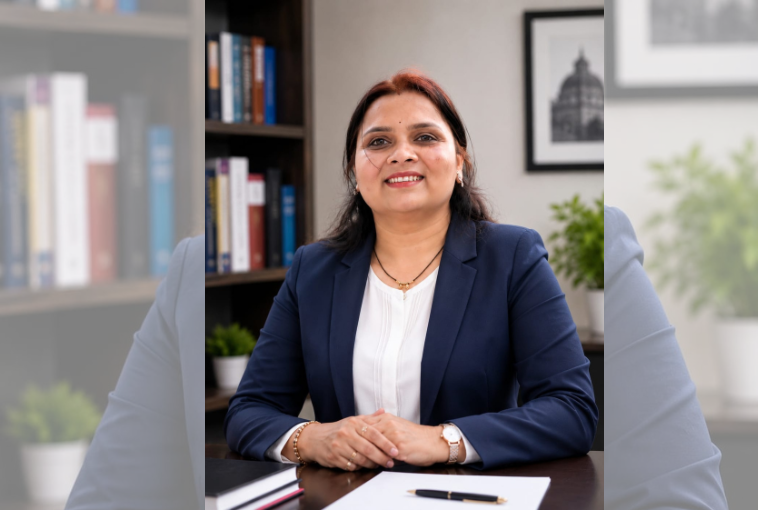
Varsha Gote – Founder – Expertview Academy / Expertview Preschool