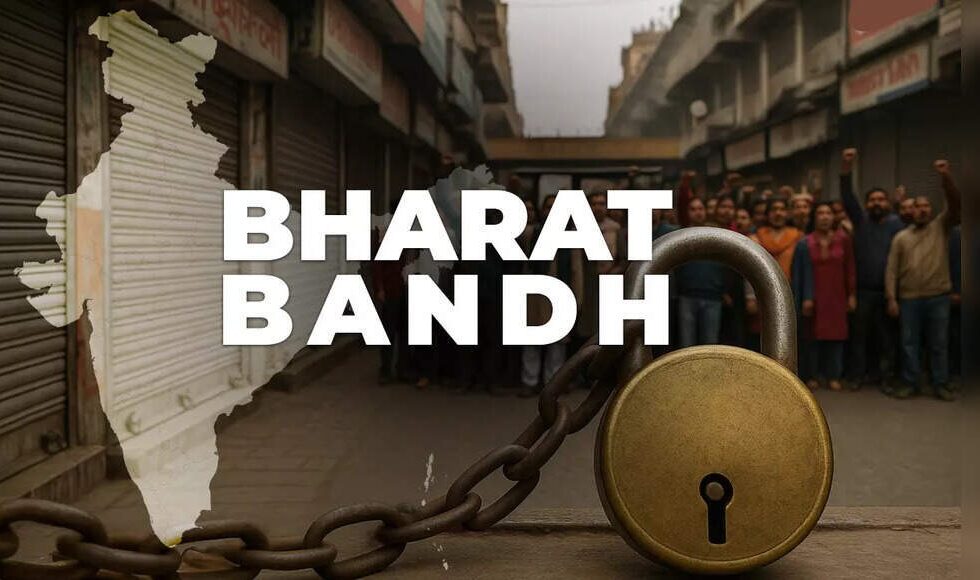
Bharat Bandh Tomorrow : Will Your City Shut Down? These 10 Services May Be Hit; Finish Important Tasks Today
A nationwide “Bharat Bandh” has been called for Thursday, February 12, in protest against the central government’s labour policies. Ten major central trade unions have jointly announced the strike, with farmer organisations extending their support. Organisers claim that nearly 300 million workers could participate, which may disrupt normal life in several parts of the country.
The protest is primarily against the four new labour codes introduced by the central government. According to the government, these laws aim to simplify labour regulations and improve ease of doing business. However, trade unions argue that the new codes could make layoffs easier for companies, increase contractual employment, and weaken workers’ collective rights. They also fear adverse effects on job security, minimum wages, social security, and labour protections. Rising unemployment, inflation, and privatisation policies are also key concerns behind the strike.
What may remain closed?
-
Operations in public sector banks may be affected
-
Markets, shops, and industrial establishments in major cities could shut in some areas
-
Attendance in government offices may be low
-
Bus services and local transport could be disrupted due to road blockades
-
Schools and colleges in some cities may remain closed as a precaution
What is likely to remain open?
-
Hospitals, medical stores, and ambulance services are expected to function
-
Flight services will likely operate as scheduled, though reaching airports may require planning
-
ATMs may remain operational, but cash availability should be checked
-
Most private offices are expected to remain open, though staff attendance may be affected
What should citizens do?
-
Complete banking and government-related work in advance
-
Check local transport updates before planning travel
-
Rely on official announcements and avoid rumours
Though the bandh is for a day, the issues surrounding labour laws, employment, inflation, and privatisation are expected to remain at the centre of political and economic discussions in the coming months.